
Blog
Roof Leak and Ceiling Repair for Homeowners: Stop the Source First
- BBB A+
- Owens Corning Preferred
- EPA Lead-Safe
- EIFS Certified
- Licensed & Bonded
Roof Leak and Ceiling Repair for Homeowners: Stop the Source First

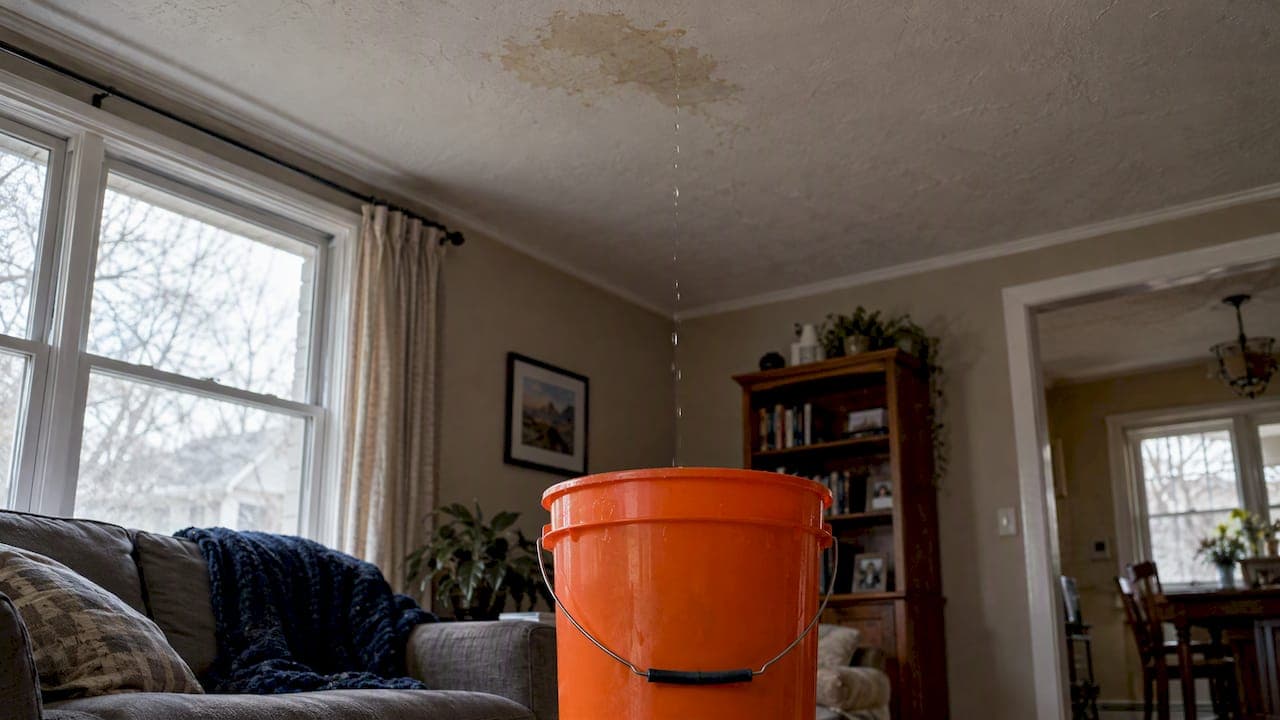
Keep everyone out of the wet room if water is near fixtures or wiring, and contact a qualified professional for help. Next, contain the water with buckets and towels, and release a bulging ceiling through one small drain hole. Then photograph everything and book an urgent inspection if the leak is active or the ceiling is sagging.
TL;DR:
- Timing narrows the source: rain points to the roof, leaks after water use suggest plumbing, and warm weather stains near an air handler suggest HVAC.
- Photograph the stain, attic, and roof before and after cleanup, save receipts and contact records, and delay permanent repairs until an adjuster inspects the damage.
- Stop the leak, dry affected areas within 24 to 48 hours, remove soaked insulation or damaged drywall, and rebuild only after the source is fixed.
- After the ceiling is fully dry, seal water stains with oil or shellac based primer; ordinary latex paint can let the discoloration show through again.
Table of Contents
- What should you do while the ceiling is actively leaking?
- How can you tell if the leak comes from the roof, plumbing or HVAC?
- What temporary fixes should you arrange, and what should you document?
- When should you call a roofer or another professional?
- What is the right order for permanent roof leak and ceiling repair?
- Who wrote this guide, and what do we offer for leaks like this?
- A roofer’s last word on ceiling leaks
- How we help when your ceiling is leaking
- FAQ
- Sources
What should you do while the ceiling is actively leaking?
Safety comes before cleanup. If water is dripping near a light fixture, ceiling fan or outlet, keep clear of the area and contact a qualified professional. Unplugging lamps and electronics is fine only if the floor and the cord are dry and you can reach the plug without stepping into water. Keep children and pets out of the room.
Then slow the damage:
- Set large buckets under the drips and lay towels around them to catch splashes.
- Move furniture, rugs and valuables out of the wet zone.
- If drywall is bulging with trapped water, keep clear of the area and contact a qualified professional to assess it.
- Call for emergency roofing help if the leak is coming straight from the roof, the ceiling is sagging heavily, or anything looks structurally unsafe.
Do not paint, caulk or patch yet. Covering a wet ceiling traps moisture and hides the problem, and fixing the source first matters because new material will simply get wet again.
Pro Tip: Photograph the stain’s outline with a pencil mark and the date. If the ring grows overnight, the leak is still active and you need help today.
How can you tell if the leak comes from the roof, plumbing or HVAC?
The stain rarely sits under the hole. Water travels along rafters, decking and insulation before it drops, so the entry point can be several feet from the spot you see. Work through these checks in order:
- Go into the attic with a flashlight after rain and look for wet insulation, dark streaks on rafters, or damp decking. Stay on the joists and never step between them.
- Check for roof signs: a stain that appears only after rain, missing or lifted shingles, loose flashing, or gutters and valleys packed with debris, as detailed in this fall maintenance checklist for homeowners.
- Look for plumbing signs: stains that show up after someone showers or runs the dishwasher, discoloration under bathrooms or kitchens, or dampness that continues on dry days.
- Check HVAC signs: an overflowing air conditioner condensate line, or staining near vents and under mechanical runs.
- Compare timing. Rain-only leaks point to the roof, use-related leaks point to plumbing, and warm-weather leaks near the air handler point to HVAC.
If you cannot narrow it down, treat it as a roof leak until a professional rules it out.
What temporary fixes should you arrange, and what should you document?
An emergency tarp is the standard short-term roof fix. A proper tarp job covers the damaged area and extends past it, with the edges fastened securely and the seams and any penetrations such as vents sealed. You can check the result from the ground: no flapping corners, no gaps, and no pooling. Our emergency tarping service is built for exactly this situation.
Inside, remove standing water, move furniture and start airing the room with fans or a dehumidifier if it is safe to run electrical equipment. Then build your insurance file, since documentation supports a claim:
- Time-stamped photos and video of the stain, the attic and the roof, taken before and after any cleanup.
- Receipts for tarping, hotel stays, storage and any supplies.
- Written notes of when the leak started, what you did and who visited.
- Names and dates for every contractor or adjuster contact.
Hold off on permanent repairs until an adjuster has seen the damage. Keep receipts for temporary work and show them to your insurer.
When should you call a roofer or another professional?
Call right away for an active leak, a sagging ceiling, visible mold, a large or growing stain, a leak that keeps coming back, or any structural concern. The diagnosis tells you who comes first: a roofer for shingle, flashing or valley problems, a plumber for use-related leaks, and an HVAC technician for condensate issues. A restoration contractor handles drying and rebuilding once the source is stopped. Because homeowners policies differ, ask your insurer how sudden rain damage through a roof is treated under your own policy.
A good inspection covers the roof covering and flashing, attic insulation, plumbing routes and the condition of the drywall, including hidden damage. You should come away with:
- A written scope of work.
- A line-item estimate.
- A realistic timeline.
- Any temporary mitigation tasks.
- Help coordinating with your insurer.
Pro Tip: Be cautious of any contractor who wants a large payment upfront for an emergency job. Ask for the scope and estimate in writing first.
For roof-sourced leaks, our roof repair team can inspect and quote, subject to weather and availability.
What is the right order for permanent roof leak and ceiling repair?

The sequence is fixed: stop the source, dry everything, then rebuild. Skipping a step means repeating the work.
Drying speed is what protects you from mold. EPA guidance points to drying within 24 to 48 hours, and it lists porous materials such as ceiling tiles that should be discarded when contaminated. Soaked insulation and badly damaged drywall usually go too.
- Repair the roof or plumbing source and confirm it holds through a rain.
- Remove wet or damaged drywall and replace saturated insulation.
- Hang new drywall, then tape, mud and sand the seams.
- Seal the area with an oil- or shellac-based stain-blocking primer, because latex paint alone tends to let stains bleed through, then apply finish paint.
- If mold is present, expect containment, HEPA vacuuming and bagging of contaminated materials before any rebuilding.
Cost and timeline depend on hidden damage, structural repairs and how easy the area is to reach.
Stain-blocking primer is not optional: oil- or shellac-based primers chemically seal water stains, while standard latex paint lets them show through again.
Who wrote this guide, and what do we offer for leaks like this?
This guide comes from Charles “Chuck” Hinkel, who has extensive experience in roofing and home services and founded Magnum Home Services. We are an Owens Corning Preferred Contractor with roofing crews and storm response. For this problem we handle emergency tarping, roof repair, water damage restoration, insurance restoration and coordinated multi-trade repairs, so one contractor can carry the job from the roof to the ceiling.
A roofer’s last word on ceiling leaks
Safety first, then stop the water, then document, then restore. The most common wasted expense I see is a fresh coat of paint over a ceiling that is still wet. Call early, because a fast response limits the damage and keeps your repair bill smaller.
— Charles Hinkel
How we help when your ceiling is leaking

When water is coming through your ceiling, you need a crew that can stop it fast and then fix the damage properly. We send a team to inspect the roof and attic, tarp the opening if rain is on the way, and give you a written estimate. We also help you organize the paperwork your insurer will want. From there we handle the permanent roof repair, drying and rebuild through our water damage restoration and insurance restoration work. Call us or request service on our website and tell us what you are seeing. We will tell you what to do while we are on the way.
FAQ
What should you do if the ceiling is leaking from the roof?
Cut power to the area if water is near fixtures, keep people clear, and catch the water with buckets and towels. Photograph the damage, then call a roofer to tarp the roof and inspect the source. Skip permanent repairs until an adjuster has seen it, as Triple-I advises.
How much does it cost to fix a leaking ceiling?
Cost depends on whether the source is the roof or plumbing, how much drywall and insulation is wet, and whether mold or structural damage is hiding above. Our estimates are written and itemized after an inspection, and the price is available on request.
Will homeowners insurance cover a ceiling leak?
Often yes when the damage is sudden and accidental, such as rain entering through a storm-damaged roof, while flood is generally excluded and maintenance-related damage commonly is too. Your own policy decides, so check it and keep your photos and receipts.
Can you paint over a water stain on the ceiling?
Only after the source is fixed and the ceiling is fully dry. Even then, seal the stain with an oil- or shellac-based primer first, because ordinary paint lets it bleed back through.
Sources
- Water Stains on Ceilings & Walls: Causes & Solutions | SERVPRO
- Mold Remediation in Schools and Commercial Buildings Guide: Chapter 4 | US EPA
- Iii
- Bobvila
Recommended
Free, no-pressure inspections across Towson & Baltimore County.
Keep Reading
More from the blog
Free Estimate
Get your free, no-pressure roof estimate
Tell us what's going on and we'll call you within one business hour. Same-week appointments available across Baltimore County.
- BBB A+
- Owens Corning Preferred
- EPA Lead-Safe
- EIFS Certified
- Licensed & Bonded